I could answer this question as a 3D artist. But I'll describe it as a buyer. A few years ago, I was buying a small apartment in Kraków, Poland. Construction hadn't even started, and I already had to commit to the biggest purchase of my life. This wasn't a quick trip to the shop for cheese.
I wanted to know everything about my future apartment, but the developer didn't have much information at that point: a few renders and some drawings.
The sales team had to put up with quite a few questions from me. And there were plenty: from the names of the plants around the building to the bicycle racks in the bike room. Some were just curiosity; others were crucial to deciding whether to buy.
First, I arranged the furniture
The first thing I did was open the apartment plan and start placing furniture. Broadly at first, then in more detail. It was a compact apartment, and our list of requirements was already long.
My experience in interior design, which I wrote about in my first article, came in very handy here. Without it, I would probably have hired an interior designer at this stage. Before even deciding to buy.
We had to act quickly, so there was no time for beautiful renders. What mattered was checking the ergonomics: where the main pieces of furniture would go, which partitions to remove and which to build for the new layout.
Another important question was where the windows faced. What would we see from the apartment? What would surround our terrace? I opened Google Maps, overlaid the building drawing and worked with my wife to estimate our window height and viewing angle. Privacy mattered a lot to us.
I remember the moment when, after a long discussion, my wife and I looked at each other and knew: we were ready to sign. I didn't yet know that she would become my most demanding 'client'. That day, I managed to convince her, in words alone, that I could solve the design issues we could already see.
We bought the apartment and often went to see how construction was progressing. Sometimes we even got to meet the builders. It took about a year and a half, and throughout that time we designed and redesigned the interior. This time, down to every detail.
I counted: around 25 rounds of revisions. But the smile on my main 'client's' face when we moved in and started living there made it worthwhile.
What attracts a buyer, and what helps them decide
I seem to have got a little carried away with the apartment story. What does all this have to do with 3D content for a sales launch?
Let's start with first impressions. Why did this building interest us at all? Because of its location and the architecture we saw in the first renders.
Fortunately, those visualizations were informative. A bird's-eye view showed the whole development, its grounds and infrastructure. Several closer views let us study the finishes and architectural details. Many of our questions were answered before we even met the sales team.
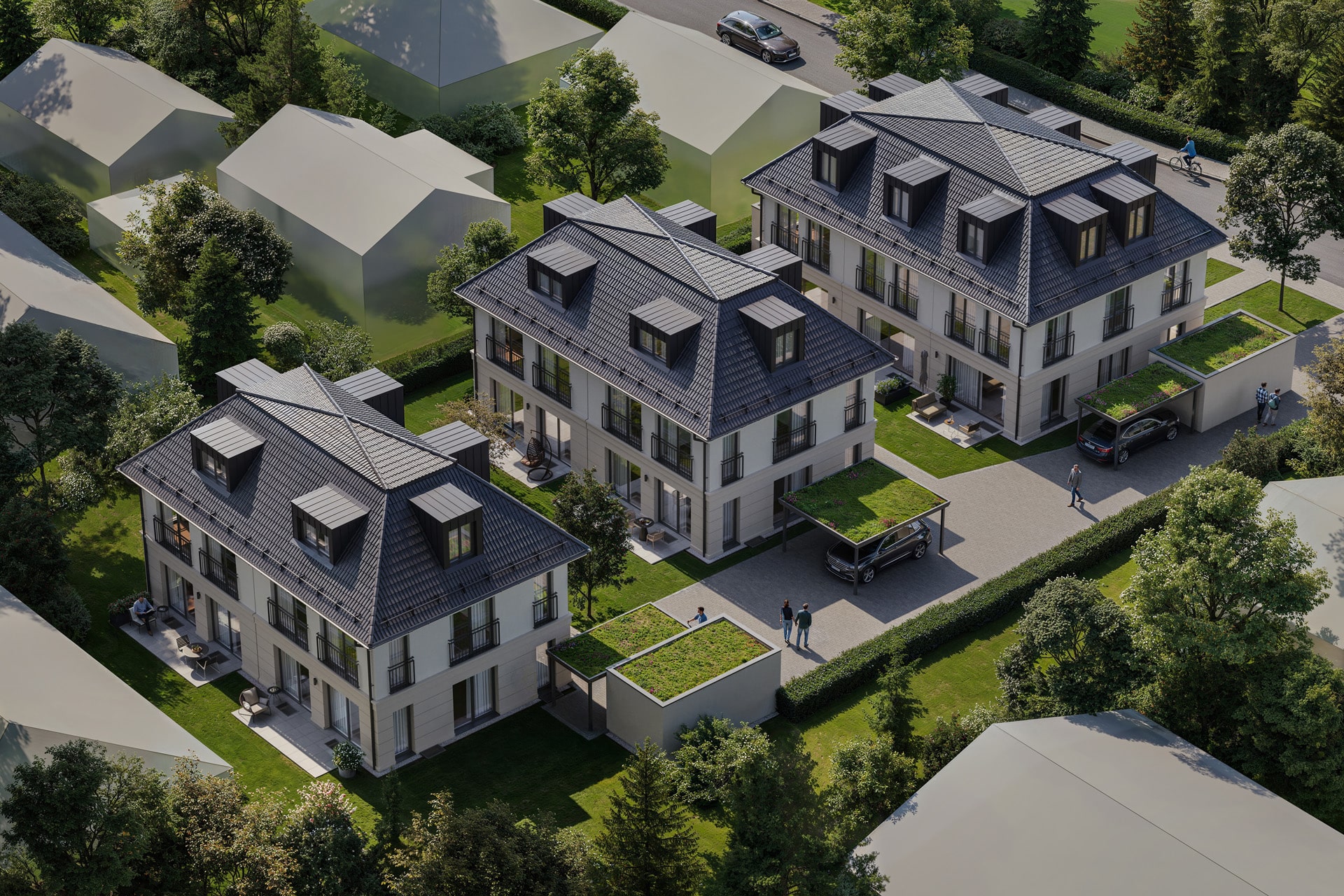
The drawings helped us understand things the renders didn't make obvious. But not everyone can read drawings. Without that skill, it is easy to feel lost just when you need to make a very important decision.
A striking render can hook a buyer. They open the website, check the price, download the floor plan and sit down to think it over. And suddenly they have another twenty questions.
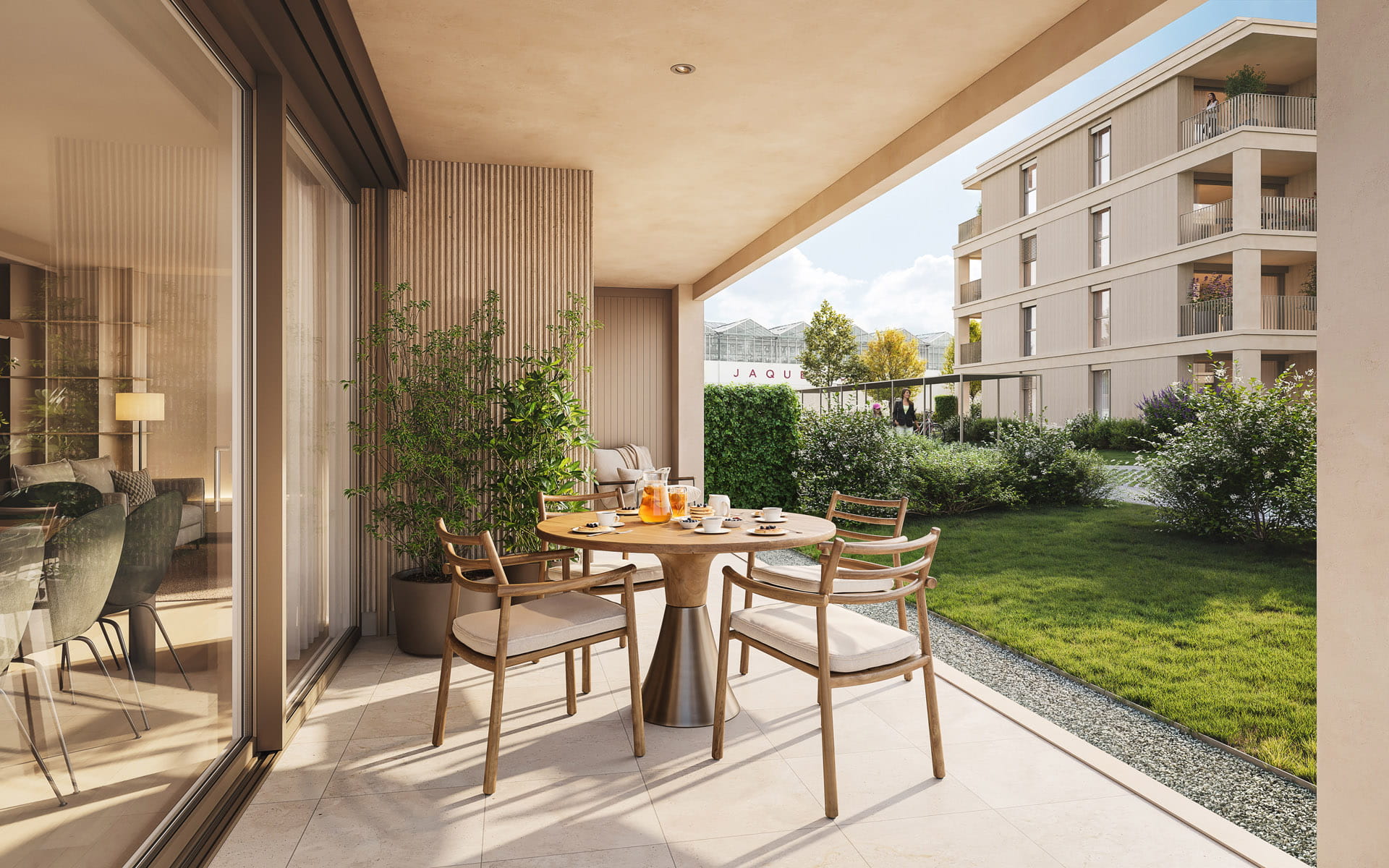
Ideally, the answers should be there on the same website. Additional visualizations can show the entrance lobby, lifts and corridors, shared spaces, playground, mailboxes, seating areas, underground parking and planting around the building. The buyer is trying to picture everyday life, not just the facade.
That doesn't mean every mailbox needs its own render. It means deciding in advance which questions each view will answer. One well-planned image can explain several things at once.
And, of course, everything shown needs to be planned beforehand. If the entrance, landscaping or shared areas in the images differ greatly from what gets built, the buyer faces an unpleasant surprise and the developer an awkward conversation. That person already has specific expectations of the property they are buying.
People buy what's inside
I'm used to seeing a future interior through simple drawings. So the lack of suitable interior visualizations wasn't an obstacle for me. For another buyer, it certainly could be.
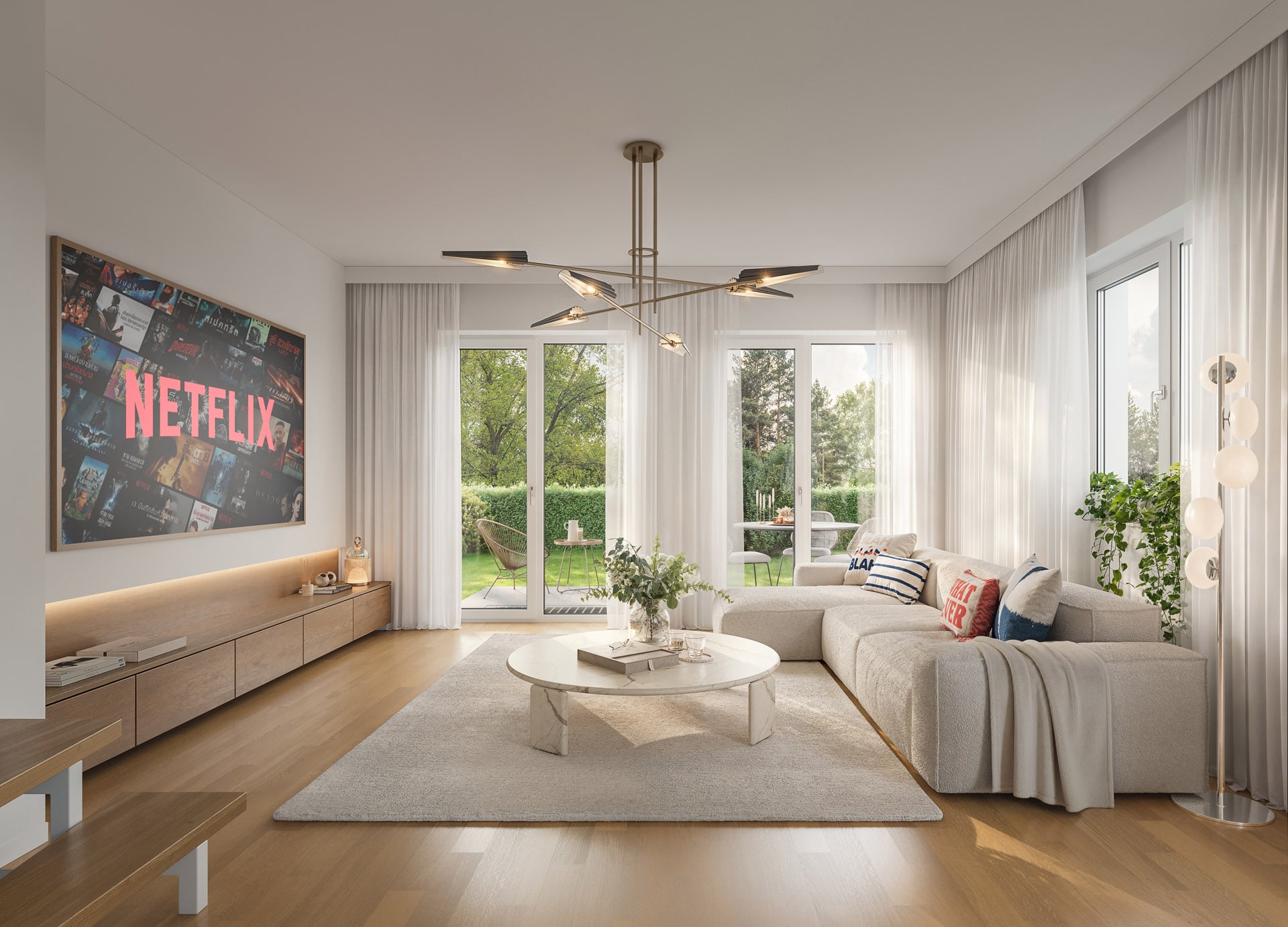
When I browse new-build brochures, I often get the feeling that a lot of time went into the exteriors, while the interiors were done with whatever was left over. Sometimes I want to remove those renders altogether so they don't put people off. After all, people are buying more than the facade: they're buying what's inside.
You don't have to show the entire apartment. But the main rooms deserve good, thoughtful, contemporary design. Enough to reveal the layout's potential and draw attention to the advantages of that particular apartment. Buyers should also understand which parts show a possible furnishing scheme and which are included in the developer's offer.
I remember our first meeting at the sales office. We were shown three apartments of roughly the same floor area, but at very different prices. We asked why. The salesperson replied that, in the architect's opinion, one apartment had a better position.
And what were we supposed to do with that information? What had we learned? Not a great deal.
A render showing the view from its window would have made things much clearer. An advantage that seems obvious to an architect on a plan can be completely invisible to a buyer.
Animation, 360° tours and apartment selectors
Animation, panoramic tours and interactive modules can add a lot to a project's presentation. But, in my view, the foundation of the marketing should be informative, detailed and, yes, sexy still renders. Everything else is the supporting act. Each additional format still has a useful role of its own.
Animation: help people choose with their hearts
An artistic animation can tell a story and attract attention. Short videos work well on social media and at the top of a website, where the aim is to convey the development's character and quality.
Sometimes animation has a more practical job. In a large development, it can explain scale and connections between spaces. In a logistics centre, for example, movement can show how different areas work together. In residential projects, though, it is often chosen primarily for the emotion: to help viewers choose with their hearts.
Animation used to require considerable resources, earning it a reputation as a service only expensive developments could afford. AI tools now let us reduce some of that work and make certain formats more accessible. We use them in the studio too. For the Les Jardins de Lully marketing campaign, for example, we created more than 150 seconds of video. I wrote more about how AI changed our work, and what still needs checking by hand, in a separate article.
360° tours: look wherever you want
We've been making these tours for more than 15 years. What I like is that viewers choose where to look: they can explore around their future home, study the space beyond the terrace or spend longer in a room that interests them.
Try the tour at Les Jardins de Lully or take a look at Matterhornstrasse. Isn't it wonderful to explore your future home in such detail before it is built? At Casa Campana Villa you can study the villa's interior and see how its rooms connect.
I won't promise that a tour like this can always be made quickly and cheaply. But it lets buyers explore at their own pace and look in the directions that matter to them.
360Viewer: choose an apartment before meeting the agent
We started creating apartment and house selectors relatively recently. One example is our 360Viewer for Kuckucksblumen. We call it that because it lets you do more than select a property: you can also rotate the view around the development.
This is useful when a developer wants buyers to explore the available properties calmly at home, before a call or an office visit. They can check prices, floor areas and other features, open documents and compare options. That can help them arrive at a meeting with more specific questions.
The module embeds in the development's website and shows which apartments or houses are available, reserved or sold. A separate management interface lets you update features, prices, statuses and document links. It's a visual alternative to a conventional apartment list.
This isn't necessarily a tool just for large developments with big budgets. The cost depends on scope and features, and a suitable version can also be considered for a small residential project. We're developing this service and gradually adding new possibilities.
What does your project need?
I don't want to finish this article by telling you to order more of everything. Although that would be a very convenient ending for a studio that makes all of it.
I wanted to talk about priorities. You need images that catch someone's attention and bring them to the website. Once there, they need enough clear visual information to understand the project and imagine living in it. This may be the biggest purchase of their life.
So I would start with a set of still 3D visualizations: what shows the development as a whole, what explains its advantages and what answers the buyer's questions. Then I would look at where animation, a 360° tour or an apartment selector could genuinely explain more.
Budgets and briefs vary. We work on projects that need just one image, and on those that need dozens of renders, tours, animations and interactive modules.
If you're not sure how many images to commission or which other formats would help your project, get in touch. We'd be happy to talk it through and help you choose a set that fits your brief.